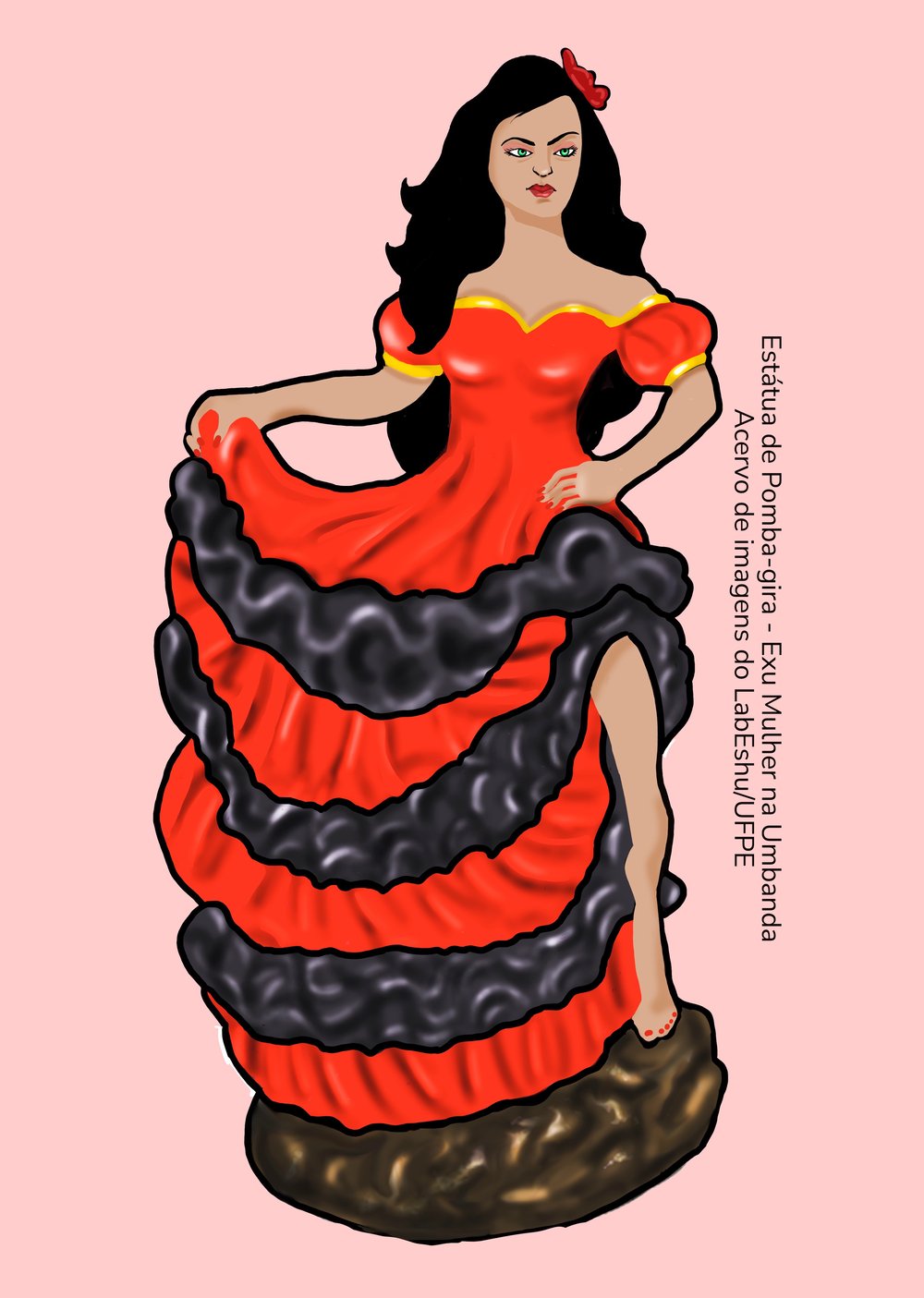

Did you know?
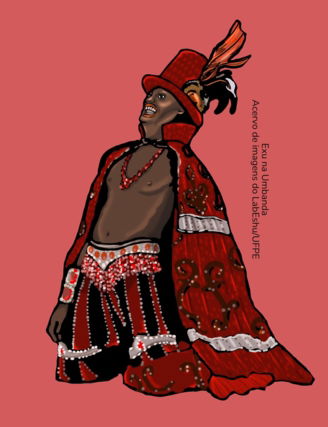
"Êh quá-quá-quá,
Oi que linda risada Exu vai dar.
Oi que linda risada Exu vai dar.
Oi que linda risada,
Êh quá-quá-quá."
[“Eh quá-quá-quá, Oh, what a beautiful laugh Exu will give. Oh, what a beautiful laugh Exu will give. Oh, what a beautiful laugh, Eh quá-quá-quá.”]
(Public domain)
About Eshu/Exu
It is no coincidence that Eshu, the acronym for the Human Sexuality Studies Laboratory and Exu, the Candomblé Orisha and the Umbanda entity are homophones. Prof Luís Felipe Rios, the founder of the research group, named it in honour of the Orisha of communication, pathways and sexuality.
In his doctoral thesis, “O feitiço de Exu” [The Exu incantation] (2004), which looks at how young men who have sex with men from Candomblé, and/or in the homosocial circles of Rio de Janeiro, construct their sexuality, the researcher recounts certain itans (Yoruba legends)/myths that underline the importance of Exu mythology for reflecting on sexualities. Here’s one example:
"They say that at the beginning of the world everything had to be created. The solid earth, the waters, the sun and other stars.... All living beings, including humans.”
They also say that the work of creation was not at all easy. In fact – say it quietly – this task is still going on! Sometimes, things had to be created, undone and recreated. A touch here, another there.
For beings as complicated as humans, several gods and goddesses helped to make them what they are: one made the body, the other the head, another the power of generation, another the conscience…
The task of locating the organs of pleasure – sex, fell to Exu, the lord of the pathways and transformative communication. And don’t think this task was fulfilled overnight.
In his search for the best place, Exu had to test several. After all, the location of the okani (penis) and the amapô (vulva) should be well-positioned, beautiful and useful – odara! – for gods and humans.
Exu tried putting them in the feet. But the dust from the road, the incessant trampling of coming and going, irritated these sensitive organs.
He tried putting them under the armpits. But now sweat was the problem, because they kept getting wet.
He also tried the head. Exu placed them just below the nose. But the smells they gave off tormented both humans and Orishas.
Finally, after many attempts, Exu found a place he considered really appropriate: between the legs, halfway between the feet and the head, at the crossroads formed in the centre of the body.
Great! Odara! Everyone agreed. And so that’s where the okani and amapô remain to this day." (RIOS, O Feitiço de Exu, 2004, p. 17)
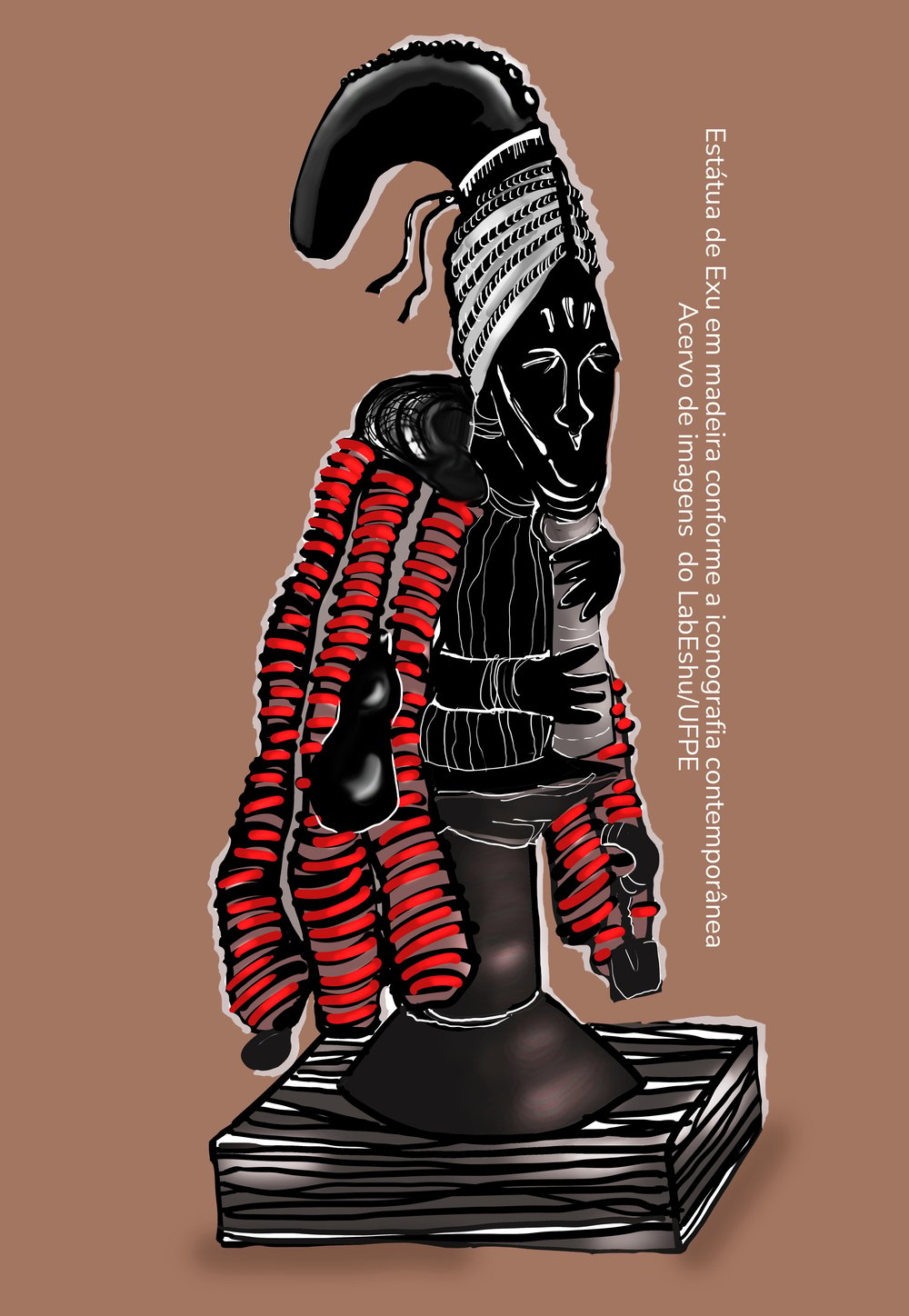
The itan posits sex as a construction, opening up possibilities for considering gender and sexuality as socially constructed.
As Luis Felipe also notes, the Exu mythology, as recreated by Candomblé and Umbanda and based on African heritage, ensures this deity is an important figure for reflections that go beyond dissident sexualities, suggesting synergies between these sexualities, race, and other subordination processes experienced in Brazil.
“The blackest of the Orishas, and the one who, as a sign of the prevailing hegemonic order, remains slave, servant and messenger for the other Orishas. A freed slave who dwells on the streets, at the crossroads, in the “moral zones”, libertine, agitator … A slave, nonetheless, since he bears the stigma of someone whose origins are imprisoned in their body, in a sexuality considered “promiscuous”, and because of the “brand” of his colour. The people of dendê are the people of Exu. A people made up of men and women who, following his example, and because they are considered third-class citizens, very often have to "play” with the world in order to survive. (RIOS, O Feitiço de Exu, 2004, p. 282)
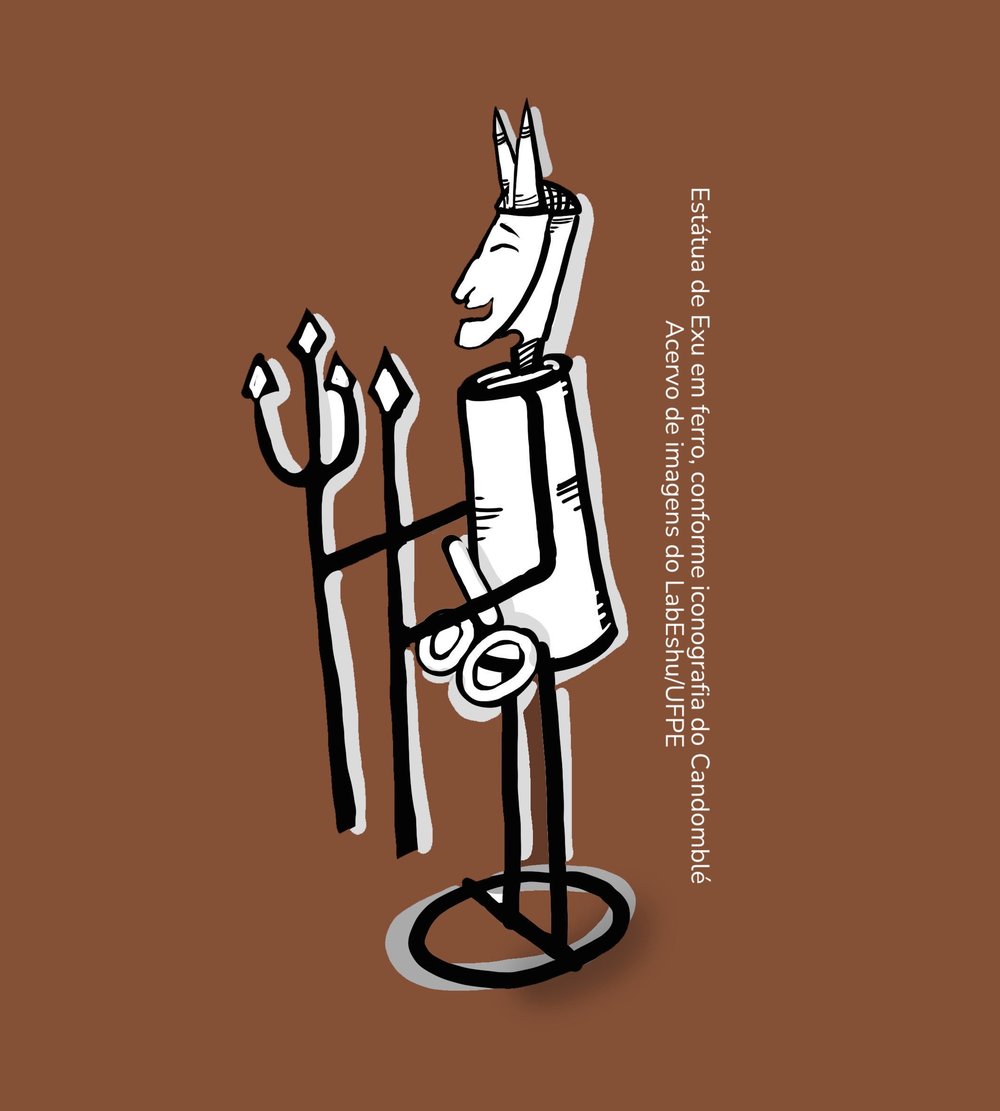
About the people
At this time of historical and mythical reclamation it is important to remember the FAGES researchers from the Postgraduate Programme in Anthropology at the Federal University of Pernambuco (UFPE), who, between 2005 and 2006, helped to found LabEshu: Professors Lady Selma Albernaz and Marion Teodosio de Quadros. Although never officially part of LabEshu, both the professors and FAGES have been important partners throughout our history.
We have another important partnership with the GEPCOL group of the Postgraduate Programme in Psychology at UFPE, particularly with Professor Jaileila Menezes, who has undertaken many of the projects on this website with LabEshu researchers.
Over the years, as new staff members have joined the Department of Psychology at UFPE, where the Laboratory is located, other professors interested in sexuality, gender, race, and counter-colonialism have found LabEshu to be a conducive place for their research-intervention-research cycles: Professors Karla Galvão Adrião (since 2009) and Luciana Vieira (since 2010).
We note that our concern is not only to understand, but also to be proactive, since working towards a society that values human dignity is deeply associated with Exu. Exu is custodian of the power of achievement, indispensable for acting upon the world.
In Umbanda, they sing:
"Exu of midnight,
Exu of dawn,
With Exu I do everything,
Without Exu I do nothing."
(Public domain)
Laroiê Exu!