
Projects
Over the years, LabEshu has hosted a multitude of projects, both coordinated by its associated research professors and developed by undergraduate, masters and doctoral students. You can find out more about our main projects here. On our Productions page, you will find links to certain outputs from projects coordinated by professors and researchers, as well as monographs, dissertations, theses, chapters and articles arising from students' work.

Homosexualities
Grouped under the same title, we have presented a range of research developments to the National Council for Technological and Scientific Development (CNPq) over the last ten years, addressing the vulnerability of men who have sex with men (MSM) to the HIV epidemic, applying various methodological approaches.
More broadly, this investment has involved qualitative research techniques (participant observation, biographical and thematic interviews) and quantitative techniques (behavioural surveys), as well as documentary analysis of the history of the epidemic in the gay community.
The project gives rise to reflections on sexual positions and vulnerability to HIV, gender stylizations, stigmatization and psychological distress, and alternative forms of STI risk management, known as seroadaptive practices — see Linktree and Academic Productions.
The current version of the project, launched in 2022, addresses the sexual behaviour of young MSM living in Recife’s Metropolitan Region (RMR) in order to analyse HIV vulnerability, looking at intersections with the SARS-CoV-2/COVID-19 pandemic.
It is based on a theoretical perspective focused on community contexts, in order to examine the sexual cultures that underpin interactions between people, understanding vulnerability to HIV as a product of the synergy between social dimensions (power relations engendered by social markers such as class, age/generation, race/ethnicity, sex/gender, etc.), programme dimensions (government responses to the epidemic), and subjective dimensions (identities, knowledge, personal abilities and emotions). This is made possible through an ethnographic and methodological approach using records of participant observation in homosocial spaces, biographical interviews and interviews with key informants.
Data is analysed from a hermeneutic perspective, which seeks to understand the elements that contribute to men's sexual behaviour as a function of their social, programme and subjective contexts, considering the impact of efforts to combat Covid-19. The study will certainly contribute to a deeper understanding of the psychosocial aspects of sexual practices, prevention measures and risk exposure, providing resources for the development of public policies more sensitive to the circumstances of MSM.
The project is funded by the National Council for Technological and Scientific Development (CNPq), in the form of a Research Productivity Grant (09265/2021-5) with research assistance from the Pro-Humanities 2022 Call for Proposals (409990/2022-1). One of its requirements is the drafting of a scientific dissemination plan to ensure that any knowledge produced is brought to the attention, not only of the scientific community, but also of service professionals and wider society. In this case, our dissemination plan consists of:
* Producing this website, as a repository of LabEshu's academic and technical outputs (informational materials), with an emphasis on the issues addressed by the research. This led to the creation of a parallel website, www.alicebeesha.com.br, which will facilitate access to project reflections for the non-specialist public, and be included in the list of tools available for use by health professionals;
* Expansion and promotion of LabEshu's presence on social media (Instagram, Facebook, Linktree);
* Seminars and workshops with key actors for the promotion of the sexual health of MSM, in order to publicise the research group’s activities and raise issues that may guide our investigations, expanding an understanding of problems within the services through scientific research;
* Production of new leaflets for the series “Na Agonia do Tesão” (In the throes of lust) – for example, on PrEP and Undetectable = Untransmittable – for wide distribution;
* Production of a booklet on combined prevention for gay men and other MSM, at the end of the project.
Our Academic Productions page is under construction, but you can find some of the project texts in book chapters in the series, ‘Gender, Sexuality and Human Rights’ by LabEshu itself. On LabEshu's Linktree you can also find some recent, significant articles published in scientific journals.
Another set of publications, directly focused on the prevention of HIV and other STIs for gay men and other MSM, is available on the Alice Bee in the Vale das Ninfas website. Featuring Alice Bee, a drag queen from Olinda, as its protagonist and guide, the website presents the social, sexual, and emotional experiences of characters in gay social spaces in the Recife Metropolitan Region — places that form what our interlocutors call the Vale das Ninfas. In addition to presenting the results of our research in a more colloquial fashion, here we invest in local gay culture as a way of discussing citizenship and health issues that affect gay men and other MSM.
Finally, we note the collection “Na Agonia do Tesão”(In the Throes of Lust), currently with five volumes - Love and Condoms, Friends Who Have Sex, Fernando and the Bear, A Different Couple, and On PrEP - which address the main intersubjective contexts of vulnerability to HIV, providing reflections and alternatives for a pleasurable and safe sex life. These materials were produced in two versions: one for social media and one for the website, where the post-porn emphasis is more evident in the images. But if you are curious about the post-porn version and the two most recent issues, visit Alice Bee, who will be delighted to relate the spicy stories of daily life in the Vale das Ninfas.
Check them out!
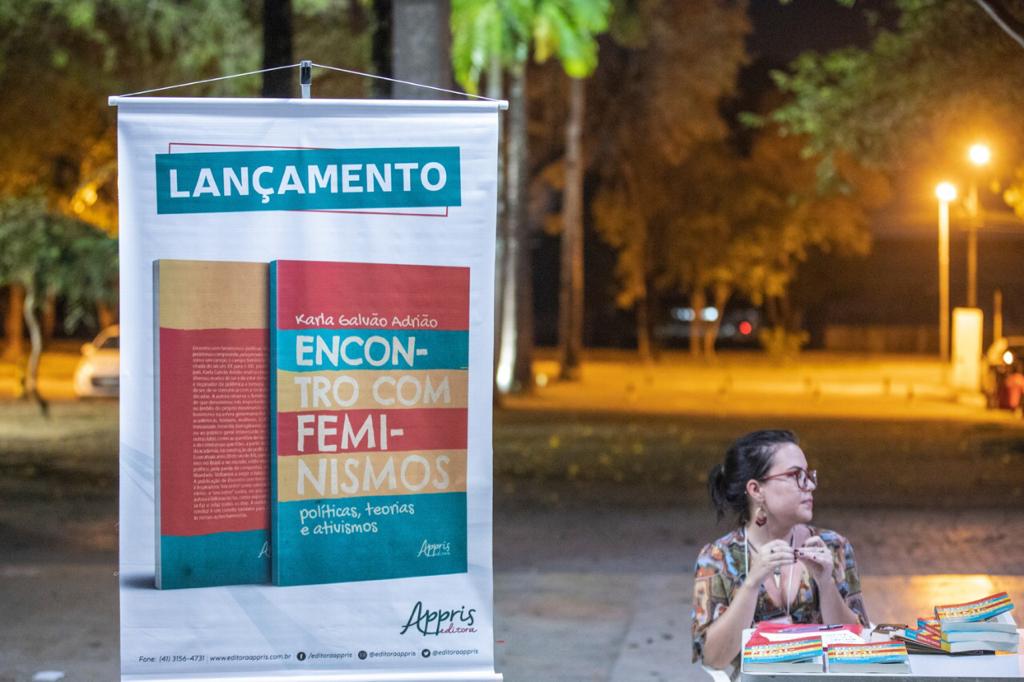
Extension project - Encounter with Feminisms: politics, theories and activism (August to October 2022)
The aim of this project was to create workshops and debates on feminism, organised by the A Coletiva (The Collective) group, a branch of LabESHU-UFPE, in partnership with local social movements and government sectors.
The workshops were based on discussions of feminism as a field - the feminist field. Partner collectives raised debates from Recife’s spaces of feminist activism; government agencies provided discussions about feminisms based on their government activities; and A Coletiva sought to connect this expertise to the academic debate, within the concrete spaces of the university, encouraging an exchange of experiences between empirical and academic knowledge in the feminist movement.
The aim was also to disseminate the rights and achievements of women and feminineness, and encourage the social movements’ current struggles through four workshops/debates, at which participants from the movement and/or academia were invited to discuss prearranged topics, with guest speakers and debaters.
At each meeting, alongside the discussions, group activities were run in the form of expressive workshops, with art therapy activities, group awareness techniques and similar.
In this way, we were able to promote moments of knowledge exchange, connection, and dialogue among those interested in feminist debates regarding academia and psychology.
Dialogues for Social Development in Suape (2011–2016)
In 2009, preparations began for the ‘Dialogues for Social Development in Suape’ (2011-2016), a research-intervention-research programme organized by the Abreu & Lima Petrobras Refinery in order to minimise the effects of the Federal Government's Growth Acceleration Programme (PAC) on the Suape micro-region, that is, the arrival of thousands of male construction workers to build the Suape Industrial and Port Complex, consisting of a refinery, shipyards, petrochemical plants and other enterprises.
According to the 2010 Census, Suape is part of Recife’s Metropolitan Region and contains the municipalities of Cabo de Santo Agostinho, with 185,123 inhabitants, and Ipojuca, with 80,542 inhabitants. While most of the works were located in Ipojuca, Cabo hosted the majority of the accommodation for thousands of men. The municipalities and their populations, including the workers, were the subject of these Dialogues.
At the end of 2009, the university brought together an extended group of researchers from various departments. Leading the researchers were Professors Luís Felipe Rios (LabEshu) and Benedito Medrado (GEMA), along with other members of the above-mentioned research groups, who coordinated activities with professors from GEPCOL and FAGES. Two NGOs with notable experience in the project's fields of activity, Instituto Papai and Centro das Mulheres do Cabo, were also involved in development and implementation.
The programme consisted of 7 interconnected projects based on the principles of the Unified Health System (SUS), in order to combat vulnerability to health problems and guarantee human rights. It reached out to the various sectors and actors which, to some extent, are involved in the health problems and rights violations related to the intervention — teenage pregnancy, sexually transmitted diseases (STDs), the commercial sexual exploitation of children and adolescents, male violence and violence against women, and the abuse of alcohol and other drugs. The topics, actors and objectives can be found below:
* Finding out about the Territory: identifying existing policies, programmes and social facilities in the municipalities, as well as social indicators and the population's perceptions of the intervention problems;
* Youth Action: empowering young people aged 16 to 19, of both sexes, to become leaders, with the ability to act in the production and dissemination of high quality information in the fields of children's and adolescents' rights, sexual and reproductive health, the abuse of alcohol and other drugs, as well as to address health hazards and rights violations;
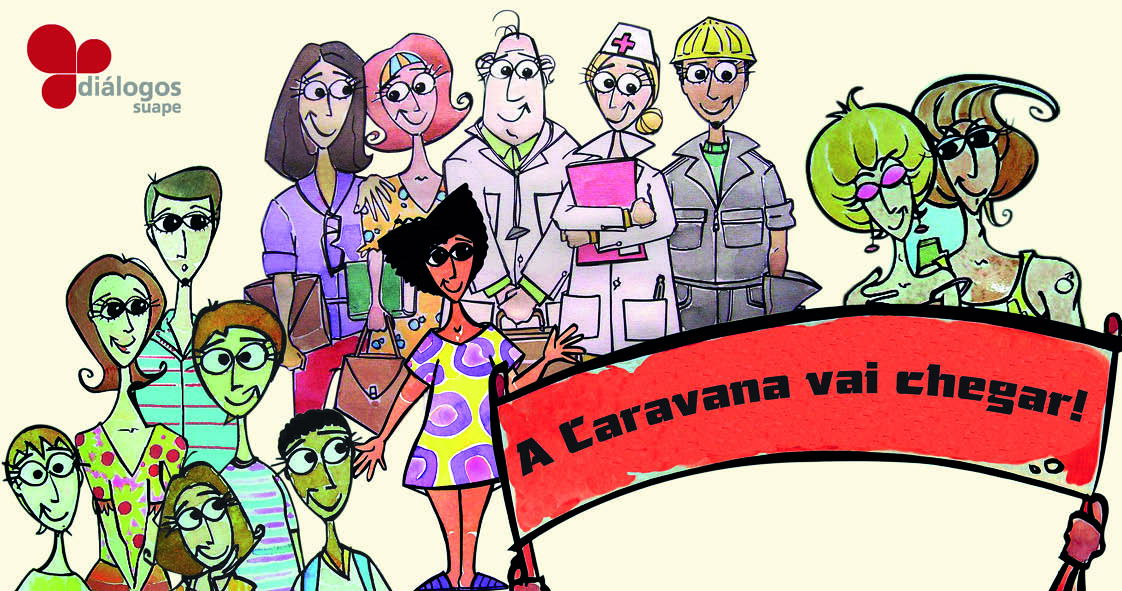
* Citizenship Caravan: mobilising local communities and equipping professionals in the fields of health, education and accountability to promote sexual and reproductive health, combat violations of sexual rights and tackle the abuse of alcohol and other drugs;
* Ladies’ Tea Party: engage and train adult sex workers in the municipalities to combat STDs/AIDS and the commercial sexual exploitation of children and adolescents;
* Women and Citizenship Education: contributing to the empowerment of women and young people in both municipalities, through training and information initiatives to combat domestic and sexual violence in the Suape micro-region;
* Men, Gender and Health Practices: Dialogues with Workers from Outsourced Companies: raising awareness and informing outsourced workers about sexual and reproductive health promotion, violence prevention and the abuse of alcohol and other drugs;
* Suape Observatory: disseminate the information and resources developed within the Dialogues for Social Development in Suape.
The Dialogues project had significant funding, to the order of BRL 4 million, at its disposal, financed by the Abreu & Lima Refinery S.A., Petroquímica Suape, the RNEST Conest Consortium, Alusa Engenharia and the RNEST O. C. Edificações Consortium (EIT/Engevix). It also received institutional support from the National Department of STDs/AIDS and Viral Hepatitis of Brazil’s Ministry of Health, the State Government of Pernambuco, and the municipal governments of Cabo de Santo Agostinho and Ipojuca.
The programme itself was completed in January 2015, but there was one final requirement, as a result of an agreement with Petroquímica Suape, to provide feedback to the communities and publish the experiences of the Dialogues and related projects in other contexts. A series of books, ‘Gender, Sexuality and Human Rights,’ was therefore produced and is available from Academic Productions.
In addition to the collections, the Dialogues project produced a rich collection of educational materials, which are frequently used in LabEshu’s research-intervention-research cycle of activities and those of its partners. These materials form part of the collection ‘Sexual rights: resources for community action’ and may found under Educational Materials.